Biodiversity in our cemeteries: how cemeteries provide space for nature to thrive
23 November 2026
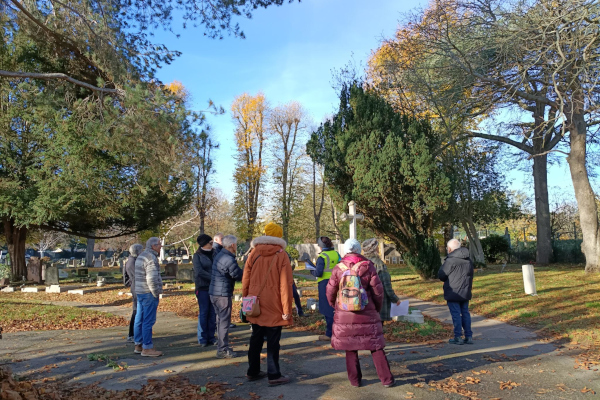
Last week, a guided biodiversity walk gave residents the chance to learn about local wildlife and how Teddington Cemetery provides space for nature to thrive.
Participants valued the knowledgeable, experienced guide and found the walk informative, particularly the insights into bats’ lives and habitats and the history of the area. They also enjoyed spending time in nature and exploring the old cemetery in the sunshine last week.
Activities like these can help people better understand the important role that local green spaces, including cemeteries, can play in supporting nature.
We’re launching more biodiversity events to give residents, schools and local groups opportunities to connect with nature and learn more about local wildlife.
To register an interest in community growing, biodiversity activities or volunteering, email parks@richmond.gov.uk.
Biodiversity is the variety of life around us, from trees, plants and wildflowers to insects, birds, bats and other wildlife. Protecting this variety, and the habitats that species depend on, is important for healthy and resilient natural environments.
Green spaces across Richmond play an important role in supporting biodiversity. Cemeteries can make a particular contribution because their combination of mature trees, hedgerows, grassland, planted areas and quieter spaces can provide food, shelter and habitats for a range of species.
Thoughtful management can increase these benefits. Protecting established trees and habitats, introducing appropriate native and pollinator-friendly planting, allowing flowers to bloom before mowing, and creating new habitat features can all help wildlife while maintaining cemeteries as welcoming and respectful places for remembrance.
Biodiversity and development
Protecting and enhancing biodiversity is an important part of the planning process.
Biodiversity Net Gain (BNG) is a National approach to development that aims to leave biodiversity in a measurably better condition than it was beforehand. In England, statutory BNG was introduced through Schedule 7A of the Town and Country Planning Act 1990, inserted by the Environment Act 2021.
For most development where the statutory BNG requirements apply, the development must deliver at least a 10% increase in biodiversity value compared with the pre-development habitat.
The Richmond Biodiversity Action Plan provides a local framework for protecting and enhancing important habitats and species across the borough.
Supporting biodiversity in Teddington
The extension project at Teddington Cemetery provides an example of how biodiversity can be incorporated into the future of a cemetery alongside its essential function as a burial space.
The project aims to support biodiversity for years to come, combining protection for existing trees with new planting and ongoing care for the landscape. 17 new trees will be planted, together with hedging, flowering lawn and bulbs.
The project will increase the BNG approximately by 17%, exceeding the statutory 10% BNG minimum applicable to the scheme
Creating the habitats is only part of the approach. There will also be opportunities to explore local wildlife and take part in food growing and bulb planting initiatives. Careful maintenance, including mowing that allows flowers to bloom where appropriate, will help these habitats establish and thrive. Regular monitoring and replacement planting where needed will support their growth over time.
Find out more about the Teddington extension project.
Share this
Up to: November 2026
Updated: 23 November 2026