Water safety
The River Thames is a hot spot for activity, particularly during the hot summer months.
As great as it can be for cooling off, it is important to remember that the Thames is a dangerous river - its strong current, houseboats and debris can all cause serious risk to life.
- Enjoy the water safely
- Know the risks
- Cold water shock
- Float to Live
- Prams and wheelchairs
- If you see someone in trouble
- Designated bathing site (Ham and Kingston)
Enjoy the water safely
We want to make it easy for you to enjoy the river as safely as possible. Find out how you can enjoy safe activities like rowing and swimming, and find safety information and aids along the river.
Before you go
Safety advice before you enter water:
- Plan ahead – let someone know your plans and when you’ll be back
- Check the weather and river conditions and be ready to change plans if needed
- Make sure your equipment is safe and suitable for your activity, this may include a lifejacket, tow float, wetsuit or other buoyancy aid
- Consider joining a club or get training and advice, and understand the risks
While on or in the water
Safety advice while on or in the water:
- Ideally have a buoyancy aid with you such as a lifejacket or tow float
- When swimming, wear a wetsuit as it will help you stay warm and can increase your buoyancy, so you can stay in the water for longer. You should also wear a brightly coloured swimming hat and take a tow float with you when swimming or dipping
- When paddleboarding, take a buoyancy aid with you and use a leash to stay connected to your equipment. If you are paddling in tidal or flowing waters such as rivers where there is a risk of entrapment or being caught on an object, then wear a quick release waist leash. Having a whistle and light attached to buoyancy aid is also recommended
- Carry a phone or way to call for help (ideally in a waterproof pouch), plus a whistle
- Stick to navigation rules - keep to the right-hand side of the river and give way to vessels that may find it more difficult to manoeuvre
- Know your limits and the conditions – most incidents happen when people underestimate risks
After your activity
If entering the water, make sure you have plenty of warm clothes and a warm drink for afterwards so you can warm yourself up carefully.
Safe activities
Getting out and enjoying activities on or near the water is a great way to keep cool in the summer. To help you plan ahead safely and get well prepared for your adventure, check out these local riverside experiences and leisure activities.
Paddle Richmond
Enjoy a range of paddle board and kayak experiences with Paddle Richmond. This includes lessons, trips, expeditions and adventures on a stunningly beautiful stretch of the River Thames. With fun and safe sessions suitable for any ability level, it is a great way to get out on the water.
Rowing clubs
Whether you like some competition or are hoping for some recreational fun, your local rowing club offer plenty of opportunities to navigate the water. From racing to sea kayaking, it is a great way to experience the river safely this summer.
River Thames Boat Project
The project offers therapeutic cruises and delivers fun educational activities that brings relaxation, health, and personal development benefits unique to the river setting. The specially adapted and wheelchair-accessible boats provide people, including those with special needs, disabilities or mental health conditions, dynamic river experiences. Find out more about the River Boat Thames Project.
Pools on the Park
This open-air pool is situated in Old Deer Park. With an outdoor pool, plus a paddling pool for the kids, Pools on the Park is the perfect spot for summer fun for the whole family. Due to high demand, book to avoid disappointment.
Hampton Pool
The year-round heater pool is great for those cooler summer days. Hampton Pool is located next to Royal Bushy Park, it is a refreshing way to spend the day (or the occasional evening – look out for the moonlight swims). The pools are monitored by a team of professional lifeguards ensuring you can swim safely.
Information and aids
Posters and leaflets have been distributed to key sites across the borough, where swimming and water sports are popular. They are also displayed on bridges and points where people may be tempted to jump in from height.
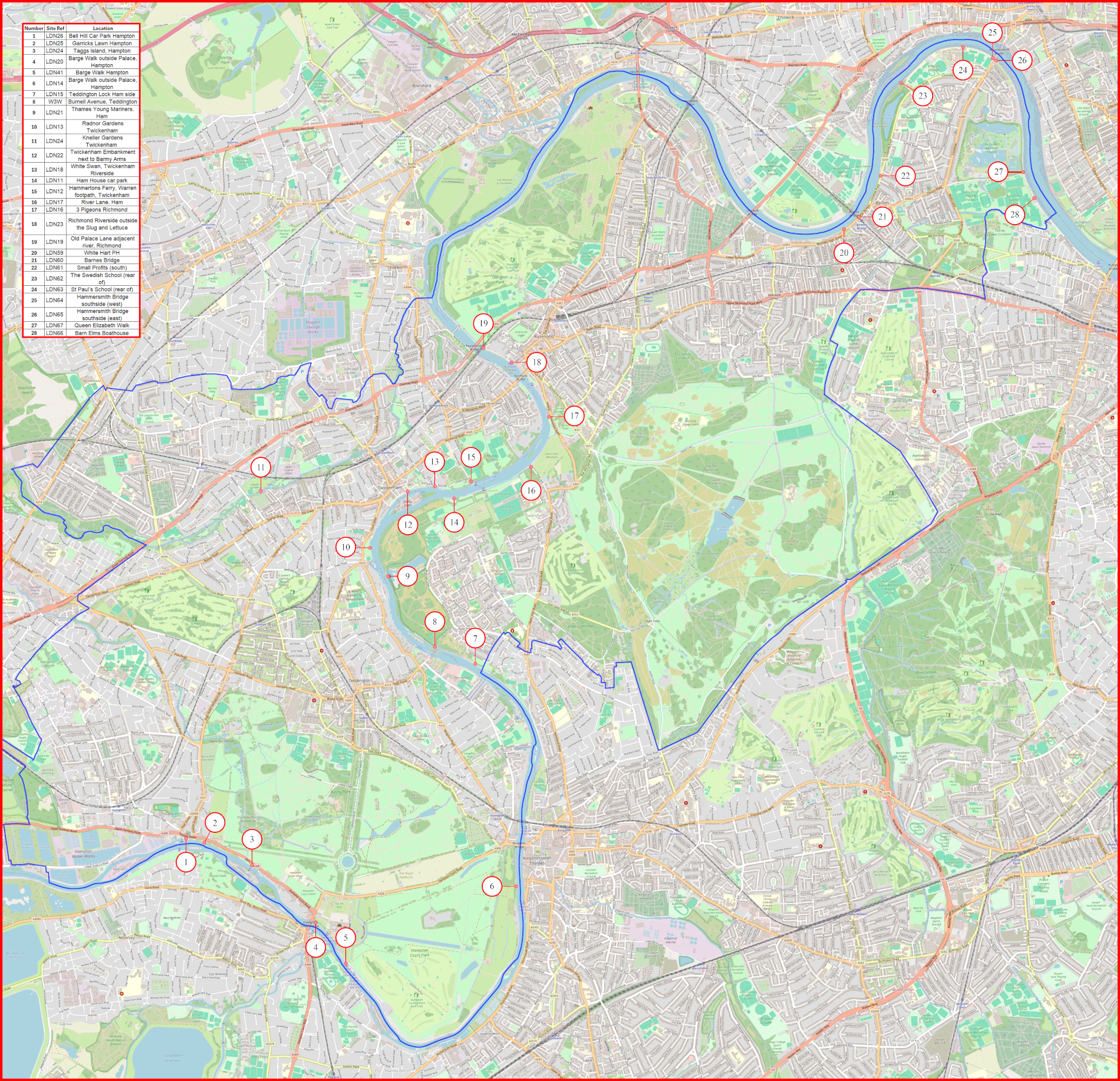
Information and throwline boards can be found in the following locations:
- Ham House and car park
- Warren Footpath, near Hammertons Ferry
- Radnor Gardens
- Barge Walk, Kingston Bridge end
- Teddington Lock
- Richmond Canoe club
- River Lane, Ham
- Riverside Twickenham, near the White Swan
- Old Palace Lane, Richmond
- Barge Walk, Hampton Court Palace end
- Thames Young Marina Inlet
- Riverside Twickenham, near the Barmy Arms
- Riverside Richmond, near the Slug & Lettuce
- Taggs Island
- Garricks Lawn
- Bell Hill
- White Hart Public House, Barnes
- Barnes Bridge
- Small Profits Dock
- The Swedish School (rear of)
- St Paul’s School (rear of)
- Hammersmith bridge upstream
- Hammersmith Bridge down stream
- Queen Elizabeths Walk
- Barn Elms Boat House
- Burnell Avenue (adjacent)
View a map of water aid locations.
Water safety aids are also available along the river. If you spot a missing aid, please report it to the police or contact the Community Safety team at community.safety@richmond.gov.uk.
Know the risks
Swimming in rivers is very different to a pool. In addition to strong currents, the cold-water temperature can easily shock, limit ability to breathe and can make you tired very quickly.
Before getting in, check to make sure you are able to get out again. Steep and slippery banks can make it hard to get out and if you are tired you can get into difficulty.
Don’t swim alone - it is better to go near the water with a friend or family member and stay visible to avoid unnecessary risks.
You never know what is beneath the surface. Hazards include rocks, broken glass, bikes, needles and pollution in the water.
Never jump from height – particularly from Richmond’s bridges. The water beneath can be very shallow and there are hidden dangers. Your body can also go into shock on contact with cold water.
Alcohol or drugs are a lethal cocktail when swimming. They can limit your ability to swim, lower your inhibitions and increase the chance of taking dangerous risks.
At times of flood, never enter the water.
Cold water shock
When in cold water (anything below 15°C), your body can go into cold water shock. If this happens, you lose control of your breathing and movement. Cold water shock also causes your heart rate and blood pressure to quickly increase, which can lead to cardiac arrest.
The average sea temperature around the UK and Ireland is just 12°C. Inland waters like lakes, rivers, lochs and reservoirs can be colder – even in the hot summer months.
Remember, if you find yourself in difficulty in the water, Float to Live.
Learn more about cold water shock.
Float to Live
If you found yourself struggling or entered the water unexpectedly, your instincts would tell you to swim hard. But cold water shock could make you gasp uncontrollably. This could cause you to breathe in water and drown.
The RNLI has five simple steps that could save your life if you get into difficulties in the water:
- If you’re struggling in the water, fight the urge to thrash around
- Lean back extending your arms and legs
- Gently move your limbs to help you float if necessary
- Float until you can control your breathing
- Then call 999, call out for help or swim to safety
Prams and wheelchairs
If you are using a pram or a wheelchair near any waterway, make sure you put the brakes on when stationary. This will reduce the chance of any accidents.
If you see someone in trouble
Raise the alarm – call 999 and ask for the Coastguard or the London Fire Brigade.
Throw them a line – look out for an emergency throw bag stationed around the river. If you are going to be swimming in the river, learn how to use it. If you can’t spot one, throw them something that floats or something to hold onto.
Stay safe – do not enter the water yourself.
Designated bathing site (Ham and Kingston)
The stretch of river between the Half Mile Tree and the YMCA Hawker Centre on Lower Ham Road has been named a designated bathing water site. Find out more about the bathing site.
Further advice
The RNLI provide safety advice and tips that can help keep you and your loved ones safe in the water this summer.
Up to: Community safety
Updated: 07 August 2026