Life on the verge: New signs explain benefits of longer grass verges
3 July 2026
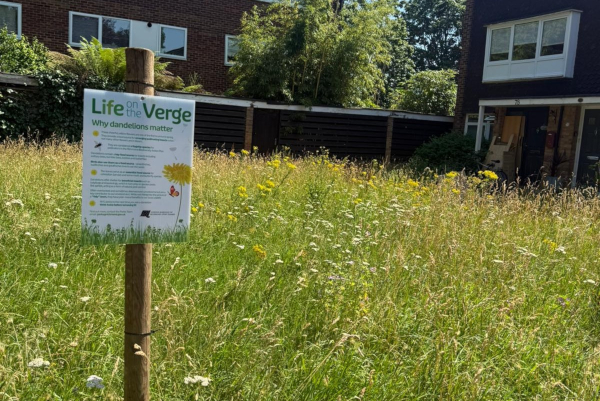
Residents may notice new signs appearing next to longer grass verges across the borough this summer, helping to explain why we are taking a more environmentally friendly approach to managing these spaces.
As part of our response to the Climate Emergency, many highway grass verges are now cut less frequently to improve biodiversity, reduce carbon emissions and create healthier habitats for wildlife. This approach also helps verges store more carbon and water, making them more resilient during periods of hot and dry weather. The longer (rural) grass verges typically only require two cuts, one in mid spring (March/April) and one in late summer.
Learn more about how we manage the boroughs grass verges.
Councillor Julia Neden-Watts, Chair of the Environment, Sustainability, Culture and Sports Committee, said: "Longer grass verges may look different to what residents are used to, but they provide real benefits for nature, air quality and climate resilience. This is not a cost-cutting measure, but a different way of managing green spaces to deliver environmental benefits.”
Since 2024, we have been collecting data with the help of volunteers to record biodiversity and the quality of the borough’s rural grass verges. During this time, we have seen a decrease in negative indicator species – these are plants we would like to discourage for example false oat-grass or broad-leaved dock – coupled with a reduction in grass coverage which indicates that there are a higher diversity and volume of plants other than grasses. This suggests our approach is having a positive impact on the condition of our verges.
The signs highlight the important role that wildflowers and longer grass play in supporting local wildlife. Dandelions, often seen as weeds, are one of the first flowers to bloom each spring. They provide a vital food source for pollinating insects including bees, butterflies and beetles throughout the growing season.
Allowing verges to grow for longer between cuts gives native plants and wildflowers the opportunity to flower and set seed, creating richer habitats for wildlife and helping to improve soil health. Over time, this can increase the variety of plants and insects found across the borough’s green spaces.
Councillor Neden-Watts added: “The signs help explain why we're managing verges differently and how even small changes can make a big difference for wildlife across Richmond upon Thames. We're also encouraging residents to get involved and see first-hand how biodiversity can improve over time."
There are approximately 180,000 square metres of highway grass verge in the borough, we are encouraging residents to get involved by volunteering to help monitor their local verge. If you would like to participate, please email parks@richmond.gov.uk.
Learn more about volunteering in our parks and open spaces.
Share this
Up to: July 2026
Updated: 3 July 2026