Flood Action Week: How greener spaces can help tackle flooding
Date:
16 October 2026
Author:
Councillor Julia Neden-Watts
Title:
Chair of the Environment, Sustainability, Culture and Sports Committee

How can a school playground or a community centre help manage flood risk? By making more room for rainwater to soak into the ground, these everyday spaces can play a part in helping communities prepare for heavier rainfall. Councillor Julia Neden-Watts, Chair of the Environment, Sustainability, Culture and Sports Committee, explains how.
Flooding isn’t just about rivers bursting their banks. Heavy rain can cause problems on our streets and in our neighbourhoods, as water runs off roads, pavements and other hard surfaces, putting pressure on drains and increasing the risk of surface water flooding.
Flood Action Week (12 to 18 October) is an opportunity to think about how we can better support communities that are more vulnerable to the impacts of flooding. Flooding can cause significant disruption to people’s lives, homes and neighbourhoods, and it’s important that we take practical steps to manage rainwater as well as helping residents understand their flood risk and prepare for heavier rainfall.
Across Richmond, we’re working to make better use of our outdoor spaces, creating more opportunities for rainwater to soak into the ground rather than run straight into drains. Keeping road gullies clear is essential, and our street cleansing and highways teams have worked hard to improve this over the past couple of years. However, during heavy rainfall, water can arrive faster than drains can carry it away, even when they are clear. Creating additional space for rainwater to soak into the ground, or be stored temporarily, is therefore an important part of managing flood risk.
Making space for water
At Lowther Primary School, sustainable drainage systems (SuDS) – including downpipe planters and rain gardens – are being introduced. These systems help manage rainwater where it falls, allowing it to soak into the ground or be stored and released more slowly. They can reduce runoff from hard surfaces while creating greener outdoor environments for pupils to enjoy.
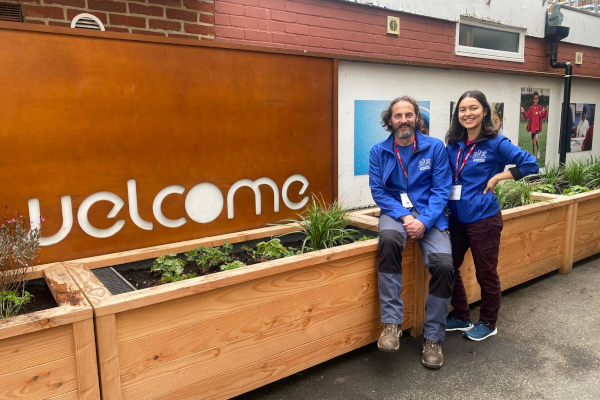
In Castelnau, we’re planning to redevelop the grounds at Castelnau Community Centre, installing water butts and permeable paving to create more opportunities for rainwater to soak away naturally. At Castelnau Recreation Ground, planned improvements include making the games area permeable and creating additional spaces – known as swales – where water can drain into the ground.
Together, these measures show how schools and community spaces can help manage rainfall more naturally and prevent local flooding.
These projects are being delivered through Community BlueScapes programme, a flood resilience partnership between Richmond Council, Barnes Common Limited and WWT – the charity for wetlands and wildlife. Across the wider programme, projects such as the river restoration at Barnes Green also demonstrate how working with nature can help improve flood resilience. Together, these schemes show how schools, community facilities and green spaces across the borough can play a part in managing rainfall more naturally.
Better for people and nature
Managing flood risk is particularly important for communities that may be more vulnerable to its impacts. Alongside helping residents prepare for flooding, improving how rainwater is managed locally can contribute to a wider approach to building resilience.
There are benefits beyond flood management, too. Greener school grounds and improved community spaces can create more attractive places for people to spend time, while providing opportunities for nature to thrive. These improvements can benefit pupils, families and local residents today, while helping us prepare for the future challenges of heavier rainfall.
Residents can help too by becoming gully guardians – spotting and reporting blocked drains to us. Small changes at home can also make a difference: soft, planted front gardens allow more rainwater to soak into the ground than hard paving, while water butts and downpipe planters can fit into even very small spaces.
Of course, no single project can eliminate flood risk. But by making more room for water and working with nature, we can take practical steps to manage rainfall and help create greener, more resilient communities.
Find out more
For advice on understanding your flood risk and preparing for flooding, visit our flooding advice page.
Find out more about Community BlueScapes and its work across the Beverley Brook catchment.
Share this
Up to: Council blog 2026
Updated: 16 October 2026